

Hand-dipped. One at a time. Every time.
Welcome to House of Suntory. Please provide your details to enter the site.
House of Suntory encourages responsible drinking. Alcohol should be consumed in moderation. By entering this website, you are agreeing to our Terms and Conditions, Privacy Policy, and Cookie Policy.
Must be legal drinking age to enter this site.
Our History
A century of Japanese spirit—an enduring chapter in the history of Japanese whisky—shaped by patience, place, and purpose.

Yatte Minahare: Where our Story Begins
Yatte Minahare is a founder’s phrase that captures the spirit at the start of our story. It is the courage to embrace the unknown, to challenge what’s accepted, and to keep moving forward when others say it can’t be done. It embodies insistence on trying, learning, refining, and trying again, guided by ambition and a belief that giving up is never the answer.
That spirit lived in Shinjiro Torii’s earliest days and carried him from those first difficult beginnings to the conviction, in 1923, that Japan could create an authentic Japanese whisky shaped to Japanese tastes. Though many considered the idea impossible, Yatte Minahare gave Suntory the willingness to pioneer.

OVER A CENTURY IN THE MAKING
From Shinjiro Torii’s early dream grew a House devoted to Japanese craft spirits—inspired by the essence of Japanese nature and shaped through a patient process.
Today, we are a House of three generations of Japanese artisans, rooted in a century of tradition and guided by meticulous craftsmanship with purpose, or Monozukuri. That quiet devotion has been recognized internationally, with our spirits awards. We do more than create spirits: we embody the Japanese philosophies and traditions that live through everything we make.
The Founder
Shinjiro Torii was born in the Meiji Period, when Western culture and civilization suddenly flowed into Japan. At a young age, Torii entered into an apprenticeship at a pharmaceutical wholesaler in Osaka that carried Western liquors. There he engaged in stylish Western pursuits and mastered techniques of mixing, then developed a discriminating palate and nose.
In the year 1899, Shinjiro Torii went independent, renting a modest house where generations of pursuit of a dream all started: the House of Suntory.
Explore Our Journey Through Time
The story of the House is written in turning points. The milestones below trace our history from Yamazaki’s beginnings to the harmony of Hibiki—one era at a time.
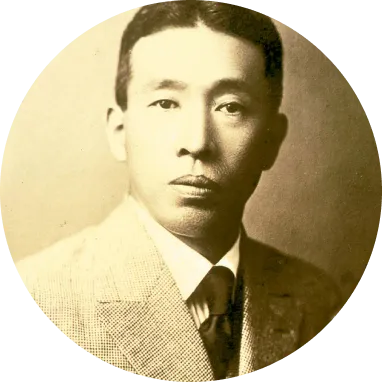
1899
Shinjiro Torii founded the Torii Shoten store in Osaka.
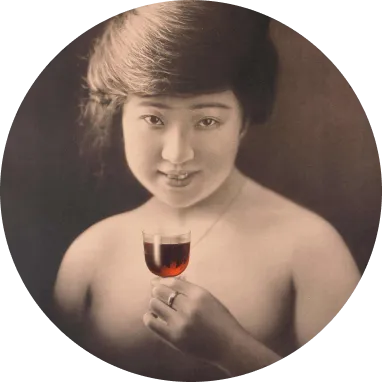
1907
Akadama Port Wine, a sweet grape wine, blended by Shinjiro Torii, is introduced and becomes a huge success.
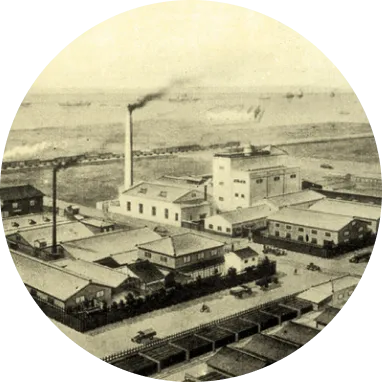
1919
Shinjiro Torii establishes the Suntory Plant in Osaka.
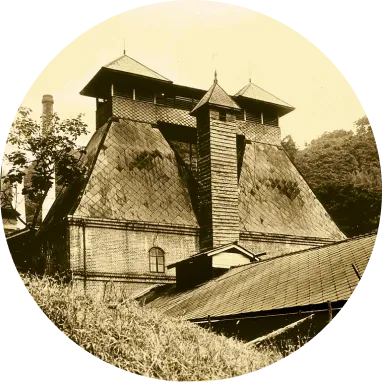
1923
The Yamazaki Distillery, Japan’s first malt whisky distillery, starts construction on the outskirts of Kyoto.
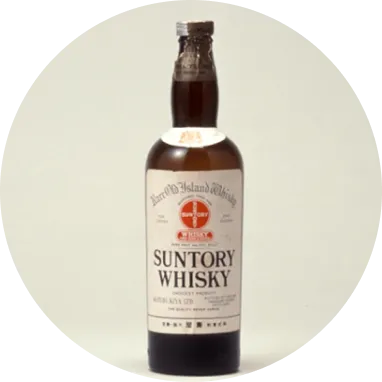
1929
Suntory Shirofuda (white label) is introduced as Japan’s first whisky, but fails. Torii learns that satisfying the delicate palate of the Japanese people is the main criteria of success.
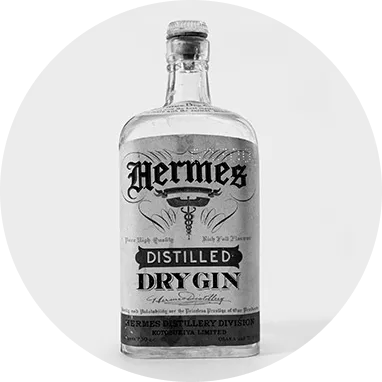
1936
Suntory introduces its first Japanese gin, Hermes Gin.
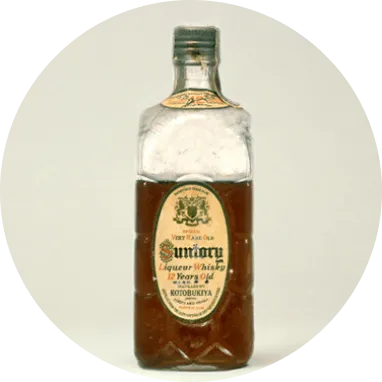
1937
Suntory Whisky Kakubin (“square bottle”) is introduced and becomes the heart and soul of Japanese whisky. Kakubin remains Japan's top-selling whisky by value today. *Source: IWSR 2022
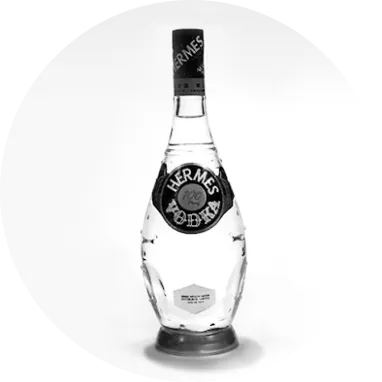
1956
Suntory introduces its first japanese vodka, Hermes Vodka.
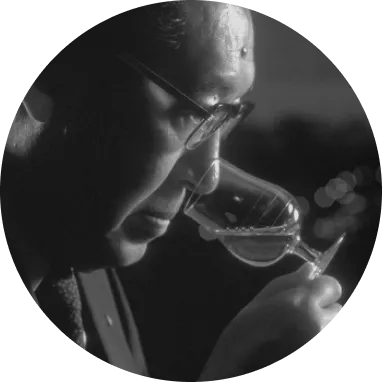
1961
Keizo Saji becomes Suntory’s second Master Blender.
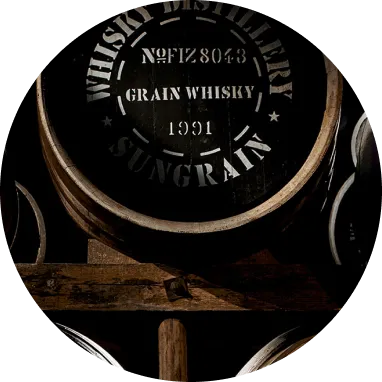
1972
Keizo Saji establishes the Chita Distillery on the Chita Peninsula.
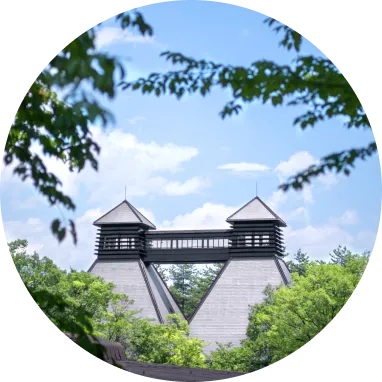
1973
The Hakushu distillery is established in the deep forest of the Japanese Southern Alps to commemorate the 50th anniversary of Japanese Whisky.
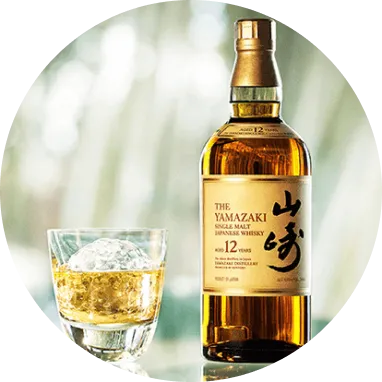
1984
Suntory Single Malt Whisky Yamazaki is introduced.
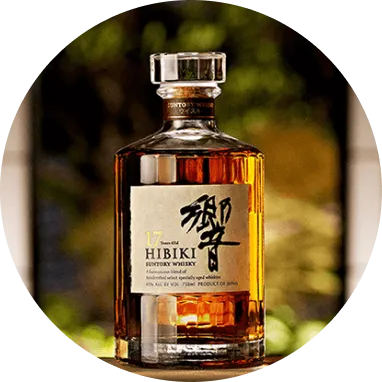
1989
Suntory Whisky Hibiki is introduced.
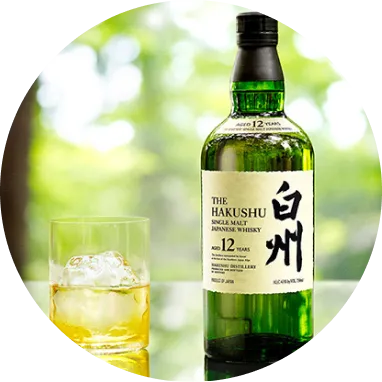
1994
Suntory Single Malt Whisky Hakushu is introduced.
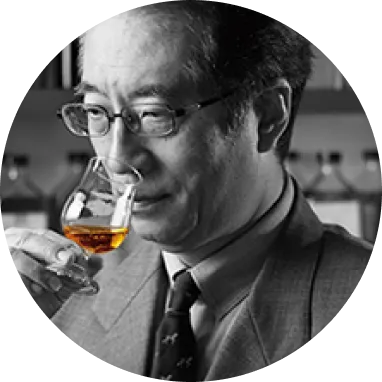
2002
Shingo Torii becomes the House of Suntory’s 3rd Master Blender.

2014
Suntory wins ISC Distiller of the Year for a third consecutive year, and fourth time in total

2016
Suntory Single Grain Whisky Chita and Suntory Whisky Toki are introduced.

2017
Roku Gin is launched, meticulously crafted with Japanese botanicals by our master artisans.

2018
Haku Vodka is launched, the Japanese Craft Vodka distilled from 100% Japanese white rice.

2019
Suntory World Whisky Ao is introduced.

2023
The House of Suntory marks an extraordinary 100-year anniversary, celebrating a century of crafting fine Japanese Whiskies.
More to Explore
About House of Suntory
Founded in 1899, Shinjiro Torii built the House of Suntory with a singular vision: to craft quintessentially Japanese spirits that would suit the delicate palate of his people.

Our Distilleries
Our distilleries are among the most unique in the world, with true artisanship and precise methods cultivated over generations.

The solid bottle shape symbolizes the identity of Japanese whisky and its flavor, while top of the bottle echoes the shape of a pot still – a nod to tradition of craftsmanship at the root of our heritage.
